President's Message
“DO YOU BELIEVE IN MIRACLES… YES!!!” That question and answer were delivered by Al Michaels as the US Hockey team defeated the Soviet Union in the hockey semi-finals of the 1980 Olympic Games.
It was February of 1980, the United States Men’s Olympic Hockey team skated into the 1980 Winter Olympics as heavy underdogs. They were a roster of college players and amateurs facing the dominant Soviet machine — a team that had defined international hockey for more than a decade. What happened in Lake Placid became one of the most iconic moments in sports history. When the final horn sounded, and the United States eventually captured gold, it was more than a win; it was a defining statement about preparation, belief, and the power of collective purpose.
If you saw the movie Miracle, you can't forget head coach Herb Brooks' words that still resonate decades later: “Great moments are born from great opportunity.” That gold medal did not happen because of luck. It was forged in relentless conditioning drills, exacting standards, and a culture that demanded excellence long before the world was watching. It had been 46 years since that men’s team stood atop the Olympic podium, and that standard still lingers as a reminder of what disciplined pursuit can achieve.
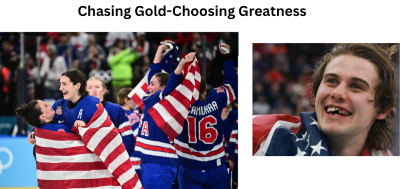
Which brings us to this past weekend… when Jack Hughes, missing a few teeth from a previous hit, slapped the puck into the net, it ended 46-years of drought since the Miracle on Ice in 1980. This was not an underdog story like Lake Placid; it was a culmination story — the product of decades of investment in youth development, international competition, and belief that American hockey could again stand atop the world. For a nation that had waited nearly half a century, the victory symbolized more than a medal. It was validation that commitment, leadership, and relentless preparation can eventually bend history. It reminded America that excellence is rarely instantaneous — sometimes it takes 46 years of striving to reclaim gold.
The USA women’s hockey team created their own defining moment of their own at these same Olympic games, winning gold as well over Canada in OT. After a 20-year wait since their first Olympic gold in 1998, they battled Canada in a dramatic final that ended in a shootout in 2018 and then again this year for their 3rd gold medal in this team event. An Olympian trains for years for a handful of shifts, perhaps one decisive moment. That is the anatomy of excellence. It is structured, intentional, and forged in habits repeated in obscurity.
There is a powerful parallel in that for us at Roswell Rotary. We may not compete beneath Olympic lights, but we live under a standard that is real. Service Above Self is not a tagline; it is a discipline. The public sees the visible victories—millions raised for charity, scholarships awarded, leadership programs shaping students, and global impact through The Rotary Foundation. What they rarely see are the countless hours of planning meetings, sponsorship calls, spreadsheets, committee work, and early mornings that make those outcomes possible. Excellence in Rotary, like excellence in sport, is never accidental.
People join Rotary for many different reasons, and almost all of them are good and worthwhile. Some come for the fellowship, some for the speakers, some for the table they’ve sat at for years, and yes, maybe even for the fried chicken. If I’m honest, I come for all of it. I love the camaraderie, the energy, the programs, and the relationships. But we must never lose sight of “WHY” we gather every Thursday – TO SERVE OTHERS. “Service Above Self” is not a slogan — it is a calling. It calls us to step outside ourselves, to move toward need, to take action that makes our community, our country, and our world better than we found it.
Author James Clear, best known for his book Atomic Habits, teaches that small, consistent improvements compounded over time create extraordinary results. Success, he argues, is less about final achievement and more about daily systems leading to that final result— about showing up and doing the work. Rotary is no different. We may not always see the full impact of one meal served to a child in Honduras, one well dug in Panama, or one dollar raised locally through our tournament. But small acts, repeated faithfully, change lives — and changed lives change the world.
The call to action is simple: lean in. Take one step. Serve.
An Olympic athlete does not know if the gold medal will come. They train as if it will. The 1980 team did not know they would become the “Miracle on Ice.” The women in 2018 did not know a shootout would define their legacy. They simply prepared with the expectation that greatness was possible. In Rotary, we do not always know which service project will change a life. We do not always know which student we mentor will become a future leader. We do not always see the ripple effects of our giving. But we show up anyway. We prepare. We serve.
Perhaps our gold medal is not measured in podium ceremonies but in people. In the student who discovers confidence. In a family supported in a difficult season. In the first responder who feels appreciated. In the child somewhere in the world, protected from polio because Rotarians refused to quit. The lesson from Olympic ice is clear: greatness requires discipline, excellence demands sacrifice, and opportunity favors the prepared. As we continue our work this year, may we embrace that same pursuit. Every meeting is an opportunity. Every project is a chance to elevate our standard. Every act of service is a stride toward something greater than ourselves. We may never hear a national anthem played in our honor, but when a community thrives because we chose to serve—that is our gold.
Sic Vos Non Vobis
Trummie Lee Patrick III
February 24, 2026
Comments
This Year’s Posts:
- Jun 30: Nominations for 2029-2030 District 6900 District Governor Are Open
- Jun 30: Nominations for 2029-2030 District 6900 District Governor Are Open
- Jun 30: Nominations for 2029-2030 District 6900 District Governor Are Open
- Jun 30: Tennis-Pickleball Clinic
- Jun 30: Sponsorships- The Tournament Engine
- Jun 30: 2026 Tournament Committee
- Jun 30: Send Pictures of What You are Doing This Holiday!
- Jun 30: Registration Team
- Jun 30: The Big Connect
- Jun 30: President's Message
- Jun 30: 2026 Golf, Tennis, Pickleball Chair Frederick Levy II
- Jun 26: Why Rotary Foundation Giving Matters
- Jun 26: RYLA 2026 - A Rave Review
- Jun 26: The Ides of June ... 2026!
- Jun 26: Update on Global Grant to End Spina Bifida
- Jun 26: Registration Open for the Teacher & Rotarian Workshop Luncheon
- Jun 26: District Investment Helps Transform Law Enforcement’s Fight Against Human Trafficking
- Jun 25: Atlanta Is Making History — And We Need YOU There
- Jun 25: Hear Tim Tebow Speak at The Rotary Human Trafficking Summit
- Jun 25: D6900 Rotary Youth Exchange Students Ready for a Year Abroad
- Jun 25: Polio at the Start of the Second Quarter of the 21st Century!
- Jun 24: GRSP Conclave Slated Aug. 21–23 in Savannah, Georgia!
- Jun 24: Roswell Rotary Continues Tradition of Leadership and Fellowship
- Jun 24: Blood Drive THIS WEDNESDAY
- Jun 23: World Cup Event at Piedmont Park July 19th
- Jun 23: Program This Week
- Jun 23: Last Week at Roswell Rotary
- Jun 23: Backpack Packing Party After Meeting
- Jun 23: Calling Interact Liaisons
- Jun 23: Welcome Ashton Dapp
- Jun 23: President's Final Message
- Jun 23: Installation Party Leslie Bassett- IT'S HERE!!!
- Jun 20: Thank You Dave McCleary!
- Jun 20: Peace Pole At The King Center
- Jun 16: Last Week at Roswell Rotary
- Jun 16: Gary Garrett
- Jun 16: President's Message
- Jun 16: Alive in Roswell
- Jun 16: Welcome Angela Freeman
- Jun 16: June 18 Speaker: Mindset Expert Ricky Kalmon
- Jun 9: Wall of Gratitude
- Jun 9: Last Week at Roswell Rotary
- Jun 9: President's Message
- Jun 9: Chris Hardman: Leading the Future of Georgia’s Hotel and Lodging Industry
- Jun 4: Cops 'N Cars Car Show
- Jun 3: Women in Rotary Event
- Jun 3: Last Week at Rotary
- Jun 2: President's Message
- Jun 2: The Courage to Change: Scott Bagwill’s 400‑Pound Journey
- Jun 1: RYLA or Bust ...
- May 31: Welcome New Rotary Clubs
- May 31: North Fulton Hosts 24th Annual Prayer Breakfast
- May 30: Exciting Events Happening in June!
- May 30: Leadership Changeover Month- Unite(d) for Good
- May 30: Atlanta Southern Crescent Hosts Women in Rotary
- May 30: Four Georgia Students Head to Norway, Denmark
- May 27: Memorial Day -Roswell Remembered
- May 27: Columbus Celebrates Laws of Life
- May 27: Why We Do All This!
- May 27: Youth at Roswell Remembers
- May 27: Roswell Celebrates Our Veterans
- May 27: Dunwoody Supports Special Olympics
- May 27: Welcome Connor Beecham
- May 27: Brookhaven Grants Support Local Community
- May 27: President's Message
- May 26: Seeking Host Families for Our Rotary Youth Exchange Student
- May 26: Investigative Journalist and Consumer Advocate Dave Cardwell our Speaker May 28
- May 25: North Cobb Runs for Hope; Cooks End of School Dinner
- May 25: Smoke on the Lake Benefits Charities Far and Wide
- May 25: Clubs Collaborate to Pack 1700 Weeks of Meals
- May 23: Registration Open for the 2026-2027 Contest Year
- May 21: Welcome Kathryn Mulkey
- May 21: Memorial Day Program at Rotary this Thursday
- May 21: Alive in Roswell
- May 21: President's Message
- May 20: Griffin Presents $5,000 J. Henry Walker III Scholarship
- May 19: Join Rotary Friendship Exchange to India - December 2026
- May 19: Moultrie Honors Students Headed to Military Service
- May 19: Last Week at Roswell Rotary
- May 13: Last Week at Roswell Rotary
- May 13: Thomas Peace Award
- May 13: President's Message
- May 12: Welcoming Kelvin King to Our May 14 Meeting
- May 7: It's Back!!!!
- May 6: Last Week at Roswell Rotary
- May 6: Free Headshots for Rotary Directory
- May 6: President's Message
- May 5: A Conversation with Georgia Supreme Court Justice Charlie Bethel
- May 3: Two Service Hero MVPs
- May 3: Recognizing Our Rising Stars and Our Above and Beyond Award Winners
- May 3: Amy Benton Receives Follow Me Award
- May 2: Recognizing Our Membership Growth Stars
- May 2: Mike Mudd, Citation for Meritorious Service
- May 2: Thanks to Our Top Foundation Supporters
- May 2: Celebrating Our Service Project Winners!
- May 2: Nick Ramey Named Rotarian of the Year; Public Image Award Winners Honored
- May 2: Congratulations Sheffield Award Winners and All-Around Best Clubs!
- Apr 30: Last Week at Roswell Rotary
- Apr 30: Save the Date: Find Your Spot and Help Us to Unite for GOOD
- Apr 30: Installation Party Leslie Bassett
- Apr 30: Volunteer!
- Apr 30: Memorial Day Ceremony
- Apr 30: May 6-9 Contact Gordon Owens by THIS Friday
- Apr 30: Pint for a Pint Blood Drive
- Apr 30: Welcome Ken Vaughn
- Apr 30: Georgia Gubernatorial Candidate, Rick Jackson, Joins Us April 30
- Apr 30: President's Message
- Apr 30: Sometimes It's Just Extra Special!
- Apr 29: Learn from Laws of Life Essay Winners
- Apr 29: Joe Jones and D6900 Highest GRSP Per-Capita Giving Clubs Honored
- Apr 29: Roswell Continues Long-Standing (or Not Standing) Tradition
- Apr 29: Register Now for RLI - June 20 Sessions Open
- Apr 29: Thanks for a Great District Conference!
- Apr 29: Let's Start By Celebrating Youth Service Month!
- Apr 29: Last Week at Roswell Rotary
- Apr 29: What's New at North Cobb Rotary?
- Apr 29: Welcome Ken Vaughn
- Apr 29: Roswell Celebrates Students and Teachers of the Year
- Apr 29: President's Message
- Apr 29: How Your Rotary Foundation Contributions Unite the World
- Apr 29: Pint for a Pint Blood Drive
- Apr 28: May 6-9 Contact Gordon Owens by THIS Friday
- Apr 28: Georgia Gubernatorial Candidate, Rick Jackson, Joins Us April 30
- Apr 22: Standing On the Shoulders
- Apr 22: Roswell Rotary Celebrates District 6900 Awards
- Apr 22: Volunteer!
- Apr 22: Memorial Day Celebration
- Apr 22: Welcome Pete Collaros
- Apr 22: President's Message
- Apr 22: Women of Roswell Rotary Social-Bulloch Hall Gift Shop
- Apr 21: Continuing the Mission: SSG Waylon Parrigin Shares the Mission of Brothers Keeper on Behalf of Chris Cathers
- Apr 20: Almost Time for RYLA!
- Apr 16: Last Week at Roswell Rotary
- Apr 16: Wall of Gratitude
- Apr 16: Alive in Roswell TONIGHT
- Apr 16: Welcome Hayward Altman
- Apr 16: President's Message
- Apr 16: 2026 District Conference- Lake Lanier Islands
- Apr 14: Spotlight on Danny Hall: A Legacy in Georgia Tech Baseball
- Apr 8: Last Week at Roswell Rotary
- Apr 8: Welcome Neil Anderson
- Apr 8: President's Message
- Apr 7: A Conversation with Georgia Insurance and Safety Fire Commissioner John F. King
- Apr 7: Thank You to Behind the Scenes Givers
- Apr 1: Speaker Line up for March- Invite a guest!
- Mar 31: Last Week at Roswell Rotary
- Mar 31: Interact Clubs in Action
- Mar 31: President's Message
- Mar 31: New Member Spotlight: Elizabeth Greer
- Mar 30: Peachtree City, Tyrone and Senoia Make Beds for Children
- Mar 30: Almost Time for Fun and Fellowship at Lake Lanier!
- Mar 30: North Cobb Rotarians On the Go!
- Mar 30: Join Rotary Friendship Exchange to India - December 2026
- Mar 30: Announcing Your 2025–26 Georgia Laws of Life Essay Contest School Winners
- Mar 30: A Season of Growth, Service, and Connection
- Mar 27: North Cobb Competes in Adult Spelling Bee to Support Students
- Mar 26: Up and Over!
- Mar 26: Inspire Generosity – Giving by Receiving
- Mar 26: Engage Rotary Means Business to Grow Membership
- Mar 26: Columbus Partners with Jordan Vocational High School
- Mar 25: Three Columbus Clubs Partner to Raise $50,000
- Mar 25: South DeKalb Dedicates Peace Pole
- Mar 25: Vinings Downhill 5K Fuels Nearly $100,000 in Support for Children’s Charities
- Mar 25: Roswell Hosts 31st Roswell Relays Track Meet
- Mar 25: Roswell: Celebrating 75 Years of Making a Difference
- Mar 24: Last Week at Roswell Rotary
- Mar 24: The Rest of the Story
- Mar 24: New Member Spotlight
- Mar 24: President's Message
- Mar 24: Senator Blake Tillery to Address Rotary on March 26
- Mar 21: Volunteer for Roswell Relays
- Mar 20: A Night of Gratitude: Peachtree City Celebrates Rotary Foundation Major Donors
- Mar 20: Buckhead Holds Paws in the Park, a Family of Service Day
- Mar 20: Buckhead Serves Dinner at Shepherd Center
- Mar 20: Celebrating an Atlanta Southern Crescent Rotarian
- Mar 20: Atlanta Southern Crescent Enjoys Pizza Night
- Mar 19: One Day for RYLA
- Mar 19: Join Senoia's "Aim for Impact" Charity Clay Shoot
- Mar 18: President's Message
- Mar 18: Last Week at Roswell Rotary
- Mar 17: 75 Years-Oh What a Night
- Mar 17: Gratitude Wall: Members Helping Members
- Mar 17: Roswell Rotary Hits $2 Million Foundation Contribution Mark
- Mar 17: Empowering Act of Saying No: Lisa Meade Romero
- Mar 17: Sweep the Hooch- Save the Date
- Mar 10: Roswell Rotary in the 2020's
- Mar 10: Last Week at Roswell Rotary
- Mar 10: President's Message
- Mar 10: Guiding Growth in North Fulton: Kristin Winzeler at True North 400
- Mar 10: 75th Anniversary Celebration Roswell Rotary Club
- Mar 5: Women in Rotary This Thursday!
- Mar 3: Last Week at Roswell Rotary
- Mar 3: Welcome New Member Martha Spencer
- Mar 3: Excellent Read Across America Day
- Mar 3: President's Message
- Mar 3: Roswell Rotary in the 2000's
- Mar 3: William Vestal: Artificial Intelligence from a Different Viewpoint
- Mar 1: Welcome to the New Rotaract Club of Southern Crescent!
- Feb 28: Here's to Water, Service and Camaraderie!
- Feb 28: A Lot to Celebrate: Alpharetta Giving, Rotary's Birthday and PELS!
- Feb 28: Griffin Daybreak Joins Read Across America
- Feb 27: Come for Rotary; Stay for Fun!
- Feb 27: Roswell's Family of Rotary Committee
- Feb 27: RLI Movement Continues to Grow 1
- Feb 26: Dunwoody Rotarians Help Anchor Place Respite Celebrate Valentine's Day
- Feb 26: Columbus Installs Peace Pole
- Feb 26: Roswell Hosts Conference for Emerging High School Leaders
- Feb 25: North Cobb ... From McKenna Farms to Kennesaw to Women's Extension
- Feb 25: Partnering with Kennesaw Capstone and Judging 2026 Essays
- Feb 25: Paul Harris Society Welcomes New Member 1
- Feb 25: North Fulton Brightens Seniors' Valentines Day
- Feb 25: Alpharetta Celebrates Annual Golden Gala
- Feb 25: Alpharetta Named as Shelter Box Hero
- Feb 25: Alpharetta Polar Plunge Raises Big Money
- Feb 25: Buckhead Pairs School Kids and Shelter Dog Projects
- Feb 25: Atlanta West End Strengthens Youth Through School Snack Initiative
- Feb 25: Rotary Means Business
- Feb 24: President's Message
- Feb 24: Gratitude Wall: Members Helping Members
- Feb 24: Last Week at Roswell Rotary
- Feb 24: Welcome Michael Mizell to Roswell Rotary!
- Feb 24: Protecting Our Communities: Wanda Wiggins on Illicit Fentanyl and Emerging Drug Threats
- Feb 24: Speaker Line up for remainder of February- Invite a guest!
- Feb 23: Sign Up here for Spring Volunteer Opportunities!
- Feb 23: Leadership 20/20 Huge Success
- Feb 20: Rotary Club of Columbus Completes Meaningful Project in Meeting
- Feb 20: Brookhaven Accepting Grant Applications
- Feb 20: Join Our Friendship Exchange Trip to India
- Feb 20: LUCKY to have RYLA!
- Feb 19: Last Week at Roswell Rotary
- Feb 19: 90's Past Presidents
- Feb 19: Over 30 years of Investing in our Roswell HS Emerging Youth Student Leaders!
- Feb 17: Atlanta Southern Crescent Delivers Valentines
- Feb 17: Valentine's Blood Drive Huge Success
- Feb 17: Speaker This Week: Col. Dwight Schmidt
- Feb 17: Hal Coleman: The "Sheriff" of Crabapple
- Feb 17: Welcome New Member Jay Pitroff
- Feb 17: President's Message
- Feb 17: From the Cockpit: Roswell Rotary Welcomes Col. Dwight Schmidt
- Feb 11: Last Week at Rotary
- Feb 11: Raise $ and Reset for Spring! Deadline March 7
- Feb 11: Gratitude Wall: Members Helping Members
- Feb 11: Welcome New Member Cathy Pope
- Feb 11: President's Message
- Feb 10: Blood Drive-Walk In's Welcome
- Feb 10: Horst Schulze Brings a No‑Nonsense Guide to Excellence on February 12
- Feb 9: Hero of the Month
- Feb 5: Welcome Bill Sawin to Roswell Rotary
- Feb 4: Roswell Adds Gratitude Wall to Weekly Newsletter
- Feb 4: Roswell Recognizes Hometown Hero: Fire Division Chief Cavender
- Feb 4: GRSP’s Biral, Jin Honored Duo for Thomas Peace Awards
- Feb 4: North Atlanta Celebrates Don Millen, 58 Years of Service
- Feb 4: Whirlwind of Activity as We Unite for Good ... and for Fun!
- Feb 4: Once a Laws of Life Student - Now a UGA Bulldog
- Feb 4: Why We Give: Enduring Impact, Fellowship at Work
- Feb 4: The Foundation’s Work Continues to Reach Further
- Feb 4: Griffin Daybreak Supports Backpack Food for Kids
- Feb 3: The 80's
- Feb 3: Read Across America
- Feb 3: The 70's
- Feb 3: Last Week at Roswell Rotary
- Feb 3: Roswell High School Interact Club
- Feb 3: Gratitude Wall: Members Helping Members
- Feb 3: President's Message
- Feb 3: Entrepreneur, Athlete, and Champion for the Growth of Volleyball- Colleen Craig to speak on February 5
- Feb 2: Celebrating the Life of Will MacArthur 1
- Jan 29: Clayton County Issues End Polio Now Proclamation
- Jan 27: Last Week at Roswell Rotary
- Jan 27: The 60's
- Jan 27: Vet Atlanta Summit-Feb 24
- Jan 27: Judging Laws of Life Entries
- Jan 27: New Member Spotlight: Lenna Castagna
- Jan 27: President's Message-The Power of Choice in Service Above Self
- Jan 27: January 29 Speaker: Former Georgia Bulldog and NFL Fullback Shaun Chapas
- Jan 26: North Cobb Rotarians Busy Making a Difference!
- Jan 26: Join the RLI Learning Opportunity: February 21 in Marietta 1
- Jan 26: Vinings Cumberland Cleans Up Community!
- Jan 25: Why I Love RYLA
- Jan 20: Honoring Hero of the Month
- Jan 20: The Beginning
- Jan 20: North Fulton Serves Schools on MLK Day of Service
- Jan 20: RRC Past Presidents in the 1950's
- Jan 20: Speaker Thursday 1/22 Kit Cummings
- Jan 20: Charter Member of Roswell Rotary Club -1951
- Jan 20: The 50's
- Jan 20: Focus on Youth- Interact & Honoring Dave Young RHS Hall of Fame
- Jan 20: Next Week Speaker Jan. 29
- Jan 20: Welcome New Member-Vanessa Snyder
- Jan 20: President's Message
- Jan 20: Georgia’s Insurance and Safety Fire Commissioner: John F. King to Speak on January 22
- Jan 19: R.I. President Arezzo to visit North Atlanta’s Global Grant Project in Ethiopia
- Jan 14: Join Us at Lake Lanier Island - April 16-19, 2026
- Jan 13: Roswell Rotary "Rocks" all Over the World
- Jan 13: Last Week at Roswell Rotary
- Jan 13: The Rest of the Story
- Jan 13: President's Message
- Jan 13: January 15 Speaker: Andy Christiansen, Business Coach and Leadership Strategist
- Jan 7: Gratitude Wal: Members Helping Members
- Jan 6: President's Message
- Jan 6: Showcasing Rotary International at the 2026 FIFA World Cup
- Jan 6: January 8, 2026 Program: Georgia Secretary of State Brad Raffensperger
- Jan 5: North Cobb Rotarian Serves City of Acworth
- Jan 1: Join Us in Taipei This June
- Dec 31: Pawsitivity in Action: Buckhead Rotary Helps our Two- and Four-Legged Neighbors this Holiday Season
- Dec 31: Twas the Night of Giving: Buckhead Rotarians Spread Holiday Cheer at the Shepherd Cente
- Dec 31: Paws, Claus, and Applause: Buckhead Rotary Serves Pets in Need
- Dec 31: Hometown Hero Recognition Sparks Grassroots Roswell Rotary Challenge…
- Dec 30: Foundations Working Together
- Dec 30: Celebrating Accomplishments and Service, Looking Ahead
- Dec 30: North Cobb Walks in Kennesaw Holiday Parade
- Dec 30: North Cobb Uses District Grant for Christmas Gifts for Georgia National Guard Families
- Dec 30: Training for District Leadership Staff January 24, 2026
- Dec 30: Stone Mountain People of Action at Work in South Africa! 1
- Dec 30: Stone Mountain Rotarians Honored by STEM Atlanta! 1
- Dec 23: The “Big Beautiful Bill Act” and Charitable Giving
- Dec 22: North Fulton Enhances Peace Garden
- Dec 21: Happy New RYLA in 2026!
- Dec 19: A New Year, A New Opportunity to Change Students’ Lives
- Dec 19: District 6900 Celebrates World Polio Day with Remarkable Fundraising Efforts
- Dec 18: Remembering Blakely Rotarian Robert William Collier Sr.
- Dec 18: Paulding Hosts Dallas Christmas Parade
- Dec 18: Meriwether County Scores Big for the Rotary Foundation Through “Foundation Football”
- Dec 16: Last Week at Roswell Rotary
- Dec 16: President's Message
- Dec 16: Cancellation of Rotary on Tap originally scheduled for this Thursday 1
- Dec 16: Reminder
- Dec 16: Thank You Roswell Rotary Members
- Dec 16: Welcome Jordan Jedneski
- Dec 16: Final Arrangements for Claire (Mrs. Darrell)Bartlett
- Dec 16: Sergeant Omar Braik- First Responder Hero
- Dec 16: Rotary Youth Exchange Big Reveal: Building Global Citizens
- Dec 16: Speaker Line up for remainder of January- Invite a guest!
- Dec 16: Tony Barnhart, “Mr. College Football,” to Speak at Rotary on December 18
- Dec 9: Roswell Rotary Welcomes Chancellor Sonny Perdue – December 11
- Dec 9: Last Week at Roswell Rotary
- Dec 9: New Member Spotlight
- Dec 9: 2025 Golf, Tennis, Pickleball Tournament Funds Raised
- Dec 9: Four Years in the Making- Past President John Carruth
- Dec 9: President's Message
- Dec 9: Holiday Party-Register Today
- Dec 8: Four Way Test- Recruiting Tool for New Members
- Dec 3: North Fulton Launches Phase 3 of Greenway Mural Project
- Dec 3: Decatur Celebrates Bedros Sharian Jr. at 100 Years 1
- Dec 2: Farrell Middleton: Championing Growth Through The Bell Curve of Life
- Dec 2: Gratitude Wall
- Dec 2: GRSP International Summer School Opportunity for Georgia Students
- Dec 2: Two Weeks Ago at Roswell Rotary
- Dec 2: Special December Opportunity
- Dec 2: Gratitude Wall
- Dec 1: Congratulations and Thanks to Bob Evans - 50 Years of Rotary Service! 1
- Nov 30: "Discovery Rotary" - An Event for Prospective Rotarians Only
- Nov 30: Buckhead Seeks New Club Administrator
- Nov 30: "Discovery Rotary" - An Event for Prospective Rotarians Only
- Nov 30: Bainbridge Shares Information on Georgia HEART Tax Credit
- Nov 30: RYE Welcomes New District 6900 Leadership Team Members
- Nov 30: Honoring Polio Eradication Champions
- Nov 30: Amy Benton Selected as District 6900's DG Nominee Designate
- Nov 30: Hope to See You in 2026
- Nov 29: Celebrating the Holidays and the Spirit of Giving
- Nov 26: President's Corner (Repost from 11/26/25)
- Nov 26: No Meeting on Thursday Nov. 27
- Nov 26: Thank You Roswell Rotary Club
- Nov 26: Opioid Crisis Abatement Grants Available 1
- Nov 26: Dunwoody Gives New Meaning to Turkey Trot
- Nov 26: Celebrating North Fulton's Foundation Giving
- Nov 26: Americus Holds Successful Unity in Community Peace Day
- Nov 26: Columbus Packs Food for 5,000+
- Nov 26: North Cobb: Serving Community, Welcoming Members
- Nov 26: Celebrating Excellence in Leadership and Learning at RLI
- Nov 26: Roswell Honors Veterans
- Nov 26: Give the Gift of RYLA
- Nov 26: President's Corner
- Nov 25: Our Rotary Foundation is “Tops” Again!
- Nov 25: Make the Season of Giving Last All Year Long with the Paul Harris Society
- Nov 25: Roswell Rotarians Jump into Action on Student Meals and More
- Nov 25: Coats and Trees for Roswell Police Dept Fundraiser
- Nov 21: Buckhead Rotarians Shine This Holiday Season
- Nov 20: Fayetteville Rotarians Win Main Street Scarecrow Competition!
- Nov 19: Peachtree City Completes Sensory Path in Record Time
- Nov 19: Why You Might Benefit from Participating in RFE
- Nov 19: South Cobb Spreads Holiday Cheer for Sanders Elementary Kids
- Nov 19: Small Change Making a Big Difference
- Nov 18: Rotary Welcomes Lt. Governor Burt Jones – Thursday, November 20
- Nov 18: Last Week at Roswell Rotary
- Nov 18: Christmas Tree Lighting
- Nov 18: Ribbon Cutting-Christkindle Market
- Nov 18: David “Asch” Aschenbach
- Nov 18: President's Message
- Nov 18: ChristKindle Market Now Open
- Nov 11: Congressman Buddy Carter Charts the Course: Ports Update Nov. 13
- Nov 11: Brookhaven Works Local Farmers Market
- Nov 11: Partnering with School Social Workers Roswell Public Schools
- Nov 11: Get Your new Rotary Shirt!
- Nov 11: Veterans Day-Honoring Those Who Served
- Nov 11: Last Week at Roswell Rotary
- Nov 11: James Rouse- Voo Doo Brewing
- Nov 11: Interested in Serving with Youth?
- Nov 11: Women of Rotary Social
- Nov 11: Introducing Rotary on Tap
- Nov 11: President's Corner
- Nov 11: Honoring Our Roswell Rotary Veterans
- Nov 10: Hero of the Month-Chris Cathers
- Nov 9: East Cobb Club Puts "Service Above Self" into Action with Inaugural Day of Service
- Nov 6: Anchors Away- Collecting for Naval Personnel
- Nov 5: It's November - That's Spelled "FOUNDATION"
- Nov 5: Georgia Laws of Life Honors Donors and Student Voices at 2025 Founders Celebration
- Nov 5: Roswell Rotary’s Family Farm Day Honors First Responders
- Nov 5: North Cobb Reach Extends from Local Community to Africa
- Nov 5: North Cobb's Mountain Top Boys Home BBQ Continues 38-Year Tradition
- Nov 5: Update From the Camino - “The Way” to Fight Polio Fundraiser
- Nov 5: Tyrone Boasts Fantastic Turnout at Founders Day 5K!
- Nov 5: Brookhaven Launches Be the Voice and Suther's Second Saturday
- Nov 5: Columbus Renews Effort to End Polio
- Nov 5: Buckhead and LifeLine: Pet Adoption and So Much More!
- Nov 5: Buckhead Pink Honor Breast Cancer Awareness
- Nov 5: So Thankful for RYLA
- Nov 5: Roswell Raises Money for Polio
- Nov 5: District Governor Steve Ivory Pushes for Polio Eradication — Literally!
- Nov 5: D6900 Rotarians Honored as Arch Klumph Society Members
- Nov 5: Join Us in Taipei Next June
- Nov 5: Join Atlanta Metro's Pickleball for Polio Tournament
- Nov 4: Turning Loss into Purpose: Pam Baker’s Vision for Connection and Community
- Nov 4: Alpharetta Celebrates Continuing Progress of Brazilian Down Syndrome Education & Training Center
- Nov 4: Dunwoody Dishes Up Lots of Food and Good Will!
- Nov 4: Recognizing World Polio Day
- Nov 4: Atlanta Southern Crescent Creates Awareness
- Nov 4: Satellite Club Asks for Help with Annual Coats for Kids Drive
- Nov 4: North Fulton Recognizes 5 New Paul Harris Society Members
- Nov 4: Last Week at Roswell Rotary
- Nov 4: Thank You to All Who Made Interact Day Last Week a Huge Success
- Nov 4: President Elect Leslie Bassett Announces Board 2026-27
- Nov 4: Dean Robertson
- Nov 4: Roswell's Own Pam Reed Baker
- Nov 4: President's Message
- Oct 28: Links to Pictures & Videos
- Oct 28: Last Week at Roswell Rotary
- Oct 28: Board Member Spotlight-Cheryl Greenway
- Oct 28: President's Message
- Oct 28: Program This Week: Interact Students & Roswell Youth Exchange
- Oct 21: State of Roswell : Roswell Police Chief Conroy & Fire Chief Pabel Troche
- Oct 21: Welcome Ryan Williams
- Oct 21: Last Week at Roswell Rotary
- Oct 21: Darrell Bartlett: Club Administration/Meetings
- Oct 20: President's Message
- Oct 15: World Polio Day
- Oct 14: President's Polio Power Play
- Oct 14: Last Week at Rotary
- Oct 14: Hometown Giants- Delta Airlines and UPS
- Oct 14: Board Member Spotlight- William Brown
- Oct 14: Cornhole for Polio Thursday Oct. 23 6:00 PM Lucky's
- Oct 14: Sweet Apple Interact Combines with Student Council
- Oct 14: District Conference Registration Info
- Oct 14: Alive in Roswell
- Oct 14: President’s Corner: Leadership with Your Sleeves Rolled Up
- Oct 14: President's Polio Power Play
- Oct 8: Last Week at Roswell Rotary
- Oct 8: Tailgating for Polio
- Oct 8: That's a Wrap- Youth Day Parade 2025
- Oct 7: Bob Hope on Leadership and His Time with Ted Turner and the Atlanta Braves
- Oct 7: Honoring Heroes at WellStar North Fulton
- Oct 7: Board Member Spotlight
- Oct 7: President's Polio Power Play
- Oct 7: President's Message
- Oct 7: First Responder Family Farm Picnic
- Oct 7: RRAH - Monday Night Football, Oct. 13th
- Sep 30: Mayor Kurt Wilson-Youth Day Parade, Youth Council, Your Role
- Sep 30: Scarecrow Roto-Lee on Canton St.
- Sep 30: Last Week at Roswell Rotary
- Sep 30: Bloody Wednesday Blood Drive
- Sep 30: Board Member Spotlight
- Sep 30: President's Message
- Sep 30: Thoughts on the Value of Membership
- Sep 30: Continuing Our Support to End Polio
- Sep 30: Zone Summit: Spotlight on Leadership, Innovation and Global Challenges
- Sep 30: Join District 6910 and Past RI President Mark Maloney in a Foundation Celebration
- Sep 30: Polio Plus Tailgate Party
- Sep 30: Women in Rotary Event
- Sep 29: Club of Excellence Awards 2024-2025
- Sep 27: Peachtree City Rotary Club Celebrates Historic Day with DG Steve Ivory
- Sep 26: Big Tax Law Enhances Direct IRA Gifts – Qualified Charitable Donations (QCD)
- Sep 26: North Cobb and Kennesaw Install Peace Pole
- Sep 26: North Cobb Pints and Pearls Supports Polio Plus
- Sep 26: Fellowship Meets Philanthropy in Dunwoody Whiskey Raffle
- Sep 25: Atlanta West End Rolls into Streets Alive!
- Sep 25: Buckhead Connects at Thirsty ThirdsDay
- Sep 25: A Behind-the-Scenes Look at LifeLine: Buckhead Rotary on the Road
- Sep 25: Forsyth-Monroe County Takes Up Pickleball!
- Sep 25: Rotarians and Teachers Kick Off 2025–26 Laws of Life Essay Contest
- Sep 25: Join Us for RLI in Columbus This November
- Sep 25: "Money for Nothing? I Think Not"
- Sep 25: Roswell Recognizes Hometown Hero: Fire Captain Jeff Mealor
- Sep 25: Roswell Shares Strategies for Launching Interact Clubs
- Sep 25: Congratulations to Our 2025-26 Competitive Grant Winners!
- Sep 24: GRSP Salutes Partnerships in Norway and Denmark
- Sep 23: Roswell Rotary Welcomes Senator Chambliss: A Statesman’s Perspective
- Sep 23: Last Week at Rotary
- Sep 23: Roswell Youth Council Installation
- Sep 23: Board Member Spotlight
- Sep 23: RYLA Club Registration Now OPEN
- Sep 23: President's Message
- Sep 23: Help Us Select Our 2028-2029 District Governor
- Sep 21: Johns Creek-North Fulton Co-Hosts Patriot Day Event
- Sep 21: Still Time to Create a Plan for World Polio Day – October 24!
- Sep 21: Dunwoody Recognized for Alzheimer's Support
- Sep 21: Americus Rotarian Supports Peacebuilding
- Sep 21: Americus Adopts a Street
- Sep 21: District 6900 Leaders Shine at the 2025 Emerging Leaders Conference
- Sep 21: Update from the Camino - “The Way” to Fight Polio
- Sep 21: Celebrating Service and Excellence in Fayetteville
- Sep 20: Walk with a Doc: Apple Picking in Ellijay plus Phy Therapist Dr Kim Richards speaks
- Sep 16: District 6900 Governor Steve Ivory to Visit Roswell Rotary Club
- Sep 16: Roswell Youth Council
- Sep 16: Dave Schmit Book Signing Event-Five Men: The Transformative Power of Mentorships
- Sep 16: Hero of the Month- Captain Jeff Mealor
- Sep 16: Courtney Lott
- Sep 16: Volunteers Needed for Roswell Arts Festival
- Sep 16: Meal Train for Bartlett Family
- Sep 16: Youth Day Parade Float
- Sep 16: Interact News
- Sep 16: This Week at Roswell Rotary: DG Visit, Our Values, Heroes, Fall Action
- Sep 16: 50-50 Ticket Winner Drawing Thursday Sept. 18
- Sep 16: Alive in Roswell
- Sep 16: Rivers Alive- Need Volunteers
- Sep 11: Last Week at Roswell Rotary
- Sep 11: Interact Clubs Cranking up
- Sep 11: No Meeting Today
- Sep 11: Heroes Among Us: Embracing Each Day to the Fullest
- Sep 11: A small act of kindness can lead to a ripple of great change
- Sep 4: 50-50 Keeps Growing!
- Sep 2: Tapped In: Roswell Rotary Gets Crafty, Beer Crafty
- Sep 2: Last Week at Rotary
- Sep 2: Pub Crawl Thursday Sept 4 5pm
- Sep 2: Juan Saves the Day
- Sep 2: Hal Schlenger- Public Image Chair
- Sep 2: Celebrating Service, Success, and Fellowship
- Sep 2: How Do I Sign Up?
- Sep 2: Bourbon and Red Wine Collection for Tournament Wine Pull
- Aug 29: GRSP Sends 2 Georgia Students to Norway, 2 to Oslo for Summer Studies
- Aug 29: Remember the Crazy Rotarian Jogging Across Death Valley?
- Aug 29: Lake Spivey/Clayton County Attends Membership Summit
- Aug 27: North Columbus Rotary Seeks Donor Clubs for Global Grant Project in Nepal
- Aug 27: Not Brick and Stone
- Aug 27: Start Planning for Lake Lanier Island!
- Aug 27: RLI Learning and Fellowship Continues
- Aug 26: September is Basic Education and Literacy Month
- Aug 26: Brookhaven Supports FODAC
- Aug 26: Angela Medley- Youth Services Chair
- Aug 26: Fayetteville Dances for a Cause
- Aug 26: Roswell Honors Hometown Heroes
- Aug 26: Roswell Strategy: Great Meetings = Membership Growth!
- Aug 26: Atlanta West End Rotary Takes Rotary’s Message 12 Stories Tall
- Aug 26: Last Week at Roswell Rotary
- Aug 26: Rivers Alive- Sweep the Hooch
- Aug 26: Interact Already in Action!
- Aug 26: Bronze Sponsors
- Aug 26: Buffalo Trace Bourbons
- Aug 26: Meeting This Week- Golf-Tennis-Pickleball Spectacular
- Aug 26: Service Above Self: Lessons from Heisman Winner Danny Wuerffel
- Aug 25: Get Ready for World Polio Day – October 24!
- Aug 24: Buckhead Shares Pizza and Fellowship with Veterans
- Aug 24: East Cobb's 20th Annual Dog Days 5K Race A Huge Success!
- Aug 24: D6900 and the Rotary Friendship Exchange
- Aug 24: Buckhead Rotarians Support Mental Health—One Paw at a Time
- Aug 24: Vinings Cumberland Rotary Hosts Record-Breaking Downhill 5K Run for the Kids
- Aug 23: “The Way” to Fight Polio
- Aug 23: Join the Roger Ackerman Circle — Make a Lasting Impact
- Aug 23: Help Us Select Our 2028-2029 District Governor
- Aug 23: Helping a UGA Student
- Aug 21: And in the World of Global Grants
- Aug 21: Michael Curling-Chair Service Project Committee
- Aug 21: Last Week at Roswell Rotary
- Aug 21: Reminders
- Aug 21: Hero Officer Thomas Chandler Honored by Roswell Rotary
- Aug 21: Encouragement That Echoes
- Aug 21: What is YOUR Role in This Year's Tournament?
- Aug 21: Membership Summit Held In Jonesboro over weekend
- Aug 21: Alive in Roswell
- Aug 20: Community and Competitive Grants
- Aug 20: DeKalb Rotary Council Collects Equipment for FODAC
- Aug 20: Decatur Hosts Rotary Youth Exchange Welcome Picnic
- Aug 20: Are you IN for 2026?
- Aug 20: North Fulton Salutes Cardiac Care Teams at Two Hospitals
- Aug 20: Griffin Daybreak Project Rolls Water in Africa
- Aug 19: From Gridiron Success to Community Impact: Danny Wuerffel to Speak at Roswell Rotary on August 21
- Aug 19: RRAH - Golf & Tennis Pop-up Fundraising event!
- Aug 19: Blood Drive August 20
- Aug 19: Roswell PD Officer Jeremy Labonte Memorial 5K Run/Walk
- Aug 16: Walk with a Doc: Community hike after Pain Mgmt Specialist Dr K talks
- Aug 12: Youth Exchange: Roswell Rotary’s Global Family Grows
- Aug 12: The Power of Encouragement: How Mike Linch Inspires Excellence
- Aug 12: Last Week at Roswell Rotary
- Aug 12: We Need Sponsorships!
- Aug 12: Alicia Hughes- Chief of Staff to President Trummie Lee
- Aug 12: Two Weeks. Two Powerful Messages. One Clear Purpose.
- Aug 12: New Member Spotlight - Walter Burnotes
- Aug 6: GRSP Alumna Completes Fulbright Scholarship, Publishes Novel
- Aug 5: Feeling Stuck? Discover Your "Why" with Jenn Gray’s "Navigating Burnout"
- Aug 5: Marietta-Metro's Newest Members Have Rotary Foundation Ties
- Aug 5: Celebrating All Your Good Work
- Aug 5: Last Week at Roswell Rotary
- Aug 5: Fun Youth Services Meeting!
- Aug 5: President's Message
- Aug 5: Roswell Rotary Board Spotlight-Nancy Alterman- Immediate Past President
- Aug 5: Free Tennis Clinic
- Aug 5: Roswell Rotary Billing -New Look
- Aug 2: Newnan Welcomes 2025-26 GRSP Student
- Jul 31: Celebrating Character, Service, and the Impact of Rotary
- Jul 30: Meet Our Polio Plus Foundation Team
- Jul 29: Friday Night Legends: Roswell’s Hall of Fame Coaches Take the Stage
- Jul 29: Seeing the Forest
- Jul 29: Last Week at Rotary
- Jul 29: Message from Huskies Helping Huskies (HHH) Leadership, Tamika Bond & Kristi Glickman:
- Jul 29: President's Message
- Jul 29: TEXT ME!- Sign Up for Roswell Rotary Club Texts
- Jul 29: Thank You Premium Sponsors!
- Jul 29: New for 2025 Tournament- 50/50 Raffle
- Jul 29: Katie Tucker-Board Secretary
- Jul 28: Peace Begins Within, at Home, and Spreads
- Jul 28: Crazy – Rotarian’s Death Valley Jog for Those Can’t
- Jul 27: Americus Creates J. Thurston Clay Memorial Scholarship
- Jul 27: North Fulton Supports NFCC Back to School Efforts
- Jul 27: Sharing the Story of Our Bob Hope
- Jul 27: District 6900 & FODAC Deliver Vital Medical Equipment to Texas Flood Survivors 1
- Jul 27: Americus Distributes Backpacks
- Jul 27: North Cobb Builds Bridges to the Community
- Jul 27: Dunwoody Bookbags Starts School Year Off Right
- Jul 27: Roswell Honors Hometown Hero
- Jul 23: Roswell Memorial Day Observances: Honoring with Purpose
- Jul 22: Save Room for RYLA!
- Jul 22: Peachtree City Awards 13 Grants —With $70K Surprise Boost from QTS Data Centers
- Jul 22: Help Change the Future of Alzheimer’s — One Coin at a Time
- Jul 22: Volunteers Make the Tournament Run
- Jul 22: Join Youth Services Committee at Variant
- Jul 22: Packing Backpacks at Rotary Meeting Thursday July
- Jul 22: July Hero- Jarrad Turner Sr.
- Jul 22: Michael Agurkis-Treasurer
- Jul 22: Fundraising Beyond Rotary
- Jul 22: Tennis & Pickleball Focus
- Jul 22: Last Week at Roswell Rotary
- Jul 22: Need Your Coolers and Your Beverage Contacts
- Jul 22: Golf-Tennis-Pickleball
- Jul 22: Message from President Trummie Lee
- Jul 22: Leadership in Action: Rotary Welcomes Georgia’s Attorney General Chris Carr
- Jul 21: Back to School Backpack Drive
- Jul 17: Lake Spivey/Clayton County Enjoys Fellowship and Fun at B’Mari Event & Art Studio
- Jul 16: GRSP Approves Budget, Elects New Leadership & Honors Christopher at Summer Meeting 1
- Jul 15: Sign Up for Interact
- Jul 15: September 8 is Coming Up Fast
- Jul 15: Last Week at Rotary
- Jul 15: We Have a DIAMOND Sponsor-Second Year in a Row!
- Jul 15: Experience the Power of Corporate Sponsorship
- Jul 15: Growing Roswell Rotary
- Jul 15: Rotary Club Welcomes Clark Dean
- Jul 15: Message from President Trummie Lee
- Jul 15: President-elect Leslie Bassett (Next Year 2026-27)
- Jul 15: Technology Assistance at Rotary
- Jul 15: Alive in Roswell
- Jul 8: The Annual Aubrey Greenway Golf & Hagan Cup Tennis Tournament Returns
- Jul 8: History 47th Aubrey Greenway Golf Tournament
- Jul 8: Volunteers Make the Tournament Run
- Jul 8: Ryan Gehricke Has Golf & Tennis Tournament Planning Cranking!
- Jul 8: Message from President Trummie Lee
- Jul 8: Trummie Lee & Team Knock Installation Out of the Park
- Jul 3: Your 2025-026 Golf & Tennis Committee Chairs
- Jul 3: How do our charities use Golf & Tennis Donations?
- Jul 3: First Look at Tournament
- Jul 3: Hagan Cup History
- Jul 3: Let's Grow Rotary Together: Don’t Miss the D6900 Membership Summit 1
- Jul 2: Taking the Summer Off!
- Jul 2: Brookhaven Packs Lunches for The Sandwich Project
- Jul 2: Mark Your Calendars: Teacher Workshop Luncheon Returns + Founders Celebration Announced
- Jul 2: Let's Go Back to RYLA 2025! 1
- Jul 1: Could This Be the Year We Stomp Out Polio?
- Jul 1: Looking Forward to A Bright New Rotary Year!!
- Jul 1: Welcome to Our New Rotary Year!
- Jul 1: Nigeria First Peace Pole Project
- Jul 1: Heroes Among Us – D6900 Goes Above and Beyond!
- Jul 1: Midtown Atlanta Celebrates Strong Year